Epoxy Flooring Bundamba
Professional epoxy flooring for Bundamba garages, workshops, businesses and industrial spaces. Get a durable, easier-to-clean floor matched to your concrete, traffic, and daily use.
Ipswich & Surrounding Areas
Garage & Commercial Flooring
Industrial Floor Coatings
Decorative Finishes
Epoxy Repairs
Recent Reviews from Bundamba & Nearby


Our Epoxy Flooring for Garages, Workshops and Businesses
From residential garages to busy workshops and commercial premises, concrete floors around Bundamba face different levels of traffic and wear. We match the coating and preparation to the condition of the floor and how you plan to use it.
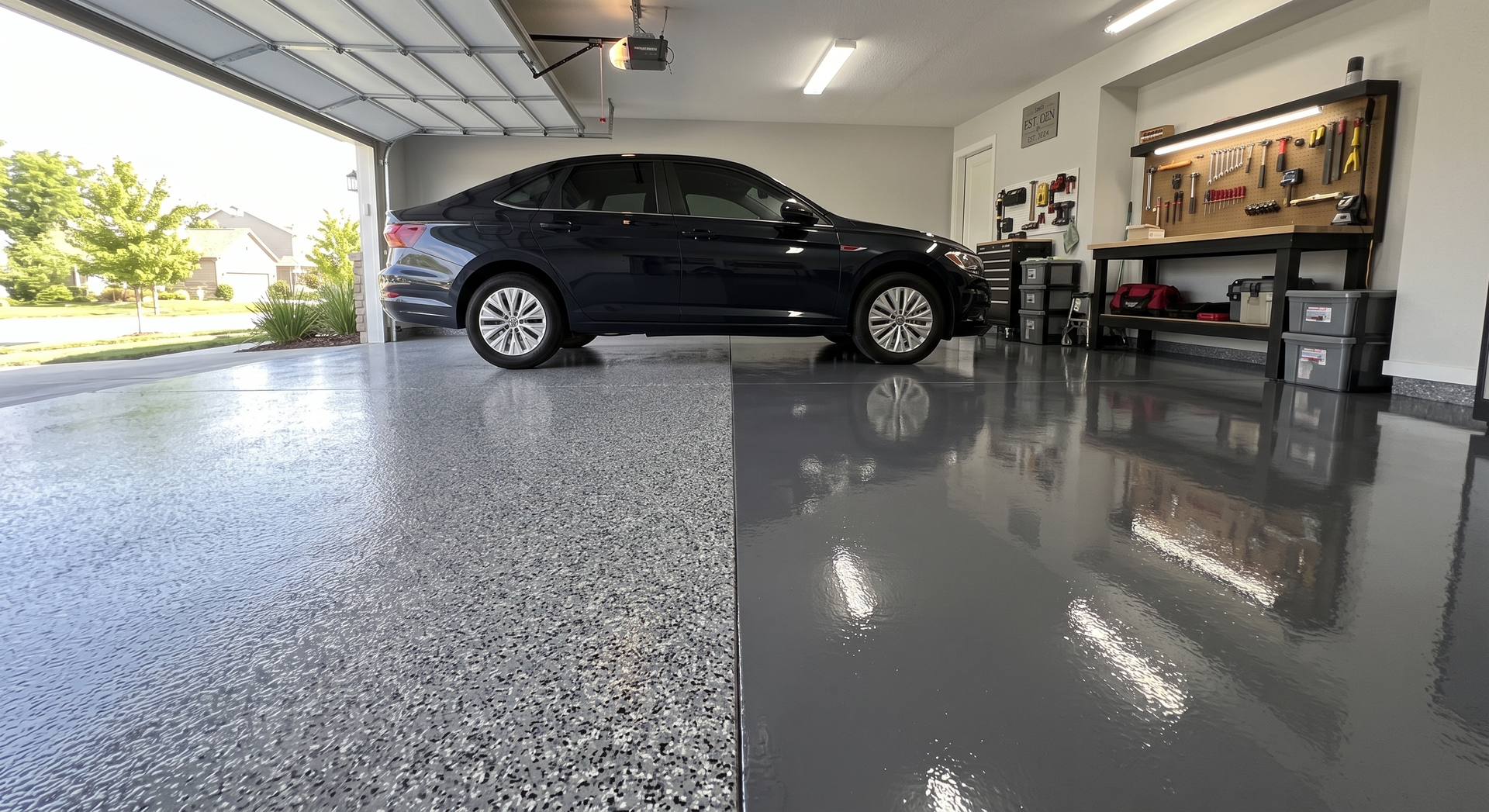
Garage Epoxy Flooring
Oil, tyre marks and daily vehicle use can quickly wear a bare garage floor. Epoxy garage flooring in Bundamba creates a sealed, easier-to-clean surface over suitable concrete.

Epoxy Floor Coatings
Stained, worn or difficult-to-clean concrete may not need complete replacement. A properly prepared surface can receive an epoxy floor coating in Bundamba for a cleaner, more practical finish.

Commercial Epoxy Flooring
Shops, showrooms and business premises need floors that handle regular foot traffic and daily use. Commercial epoxy flooring in Bundamba provides a practical coating suited to the space and concrete condition.

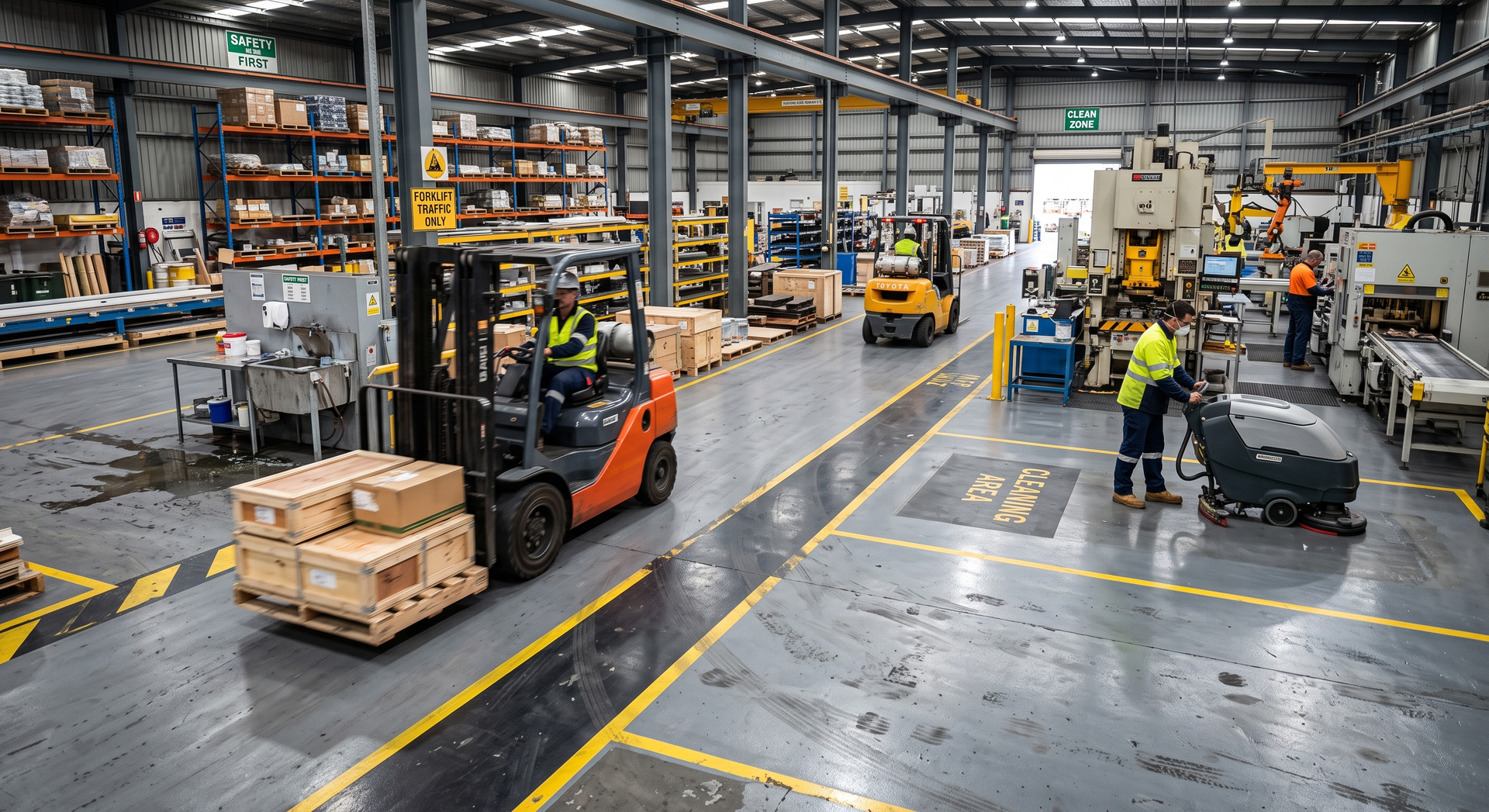
Industrial Epoxy Flooring
Workshops and industrial spaces can face heavier traffic from vehicles, machinery and equipment. Industrial epoxy flooring in Bundamba provides a hard-wearing finish where the floor and coating system are suitable.

Can Epoxy Flooring Cover Stained Concrete?
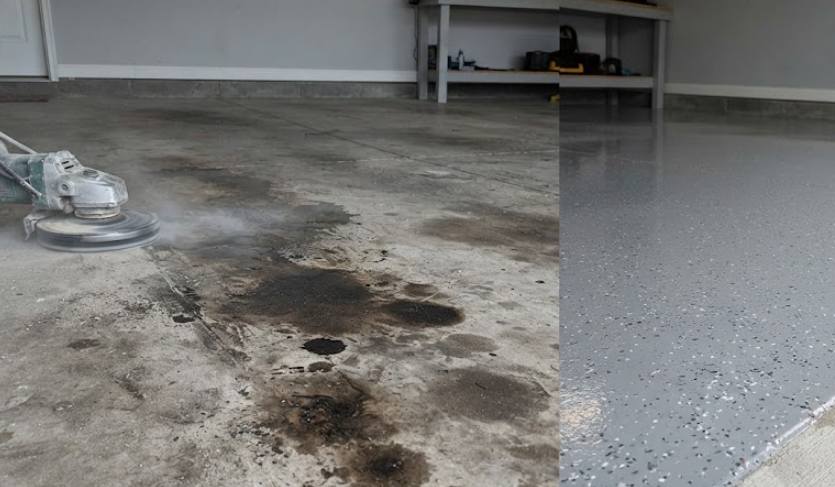
Oil, grease, tyre marks and dirt can leave garage and workshop floors heavily stained. An epoxy coating for stained concrete floors can create a sealed, easier-to-clean surface while giving worn concrete a more finished appearance.
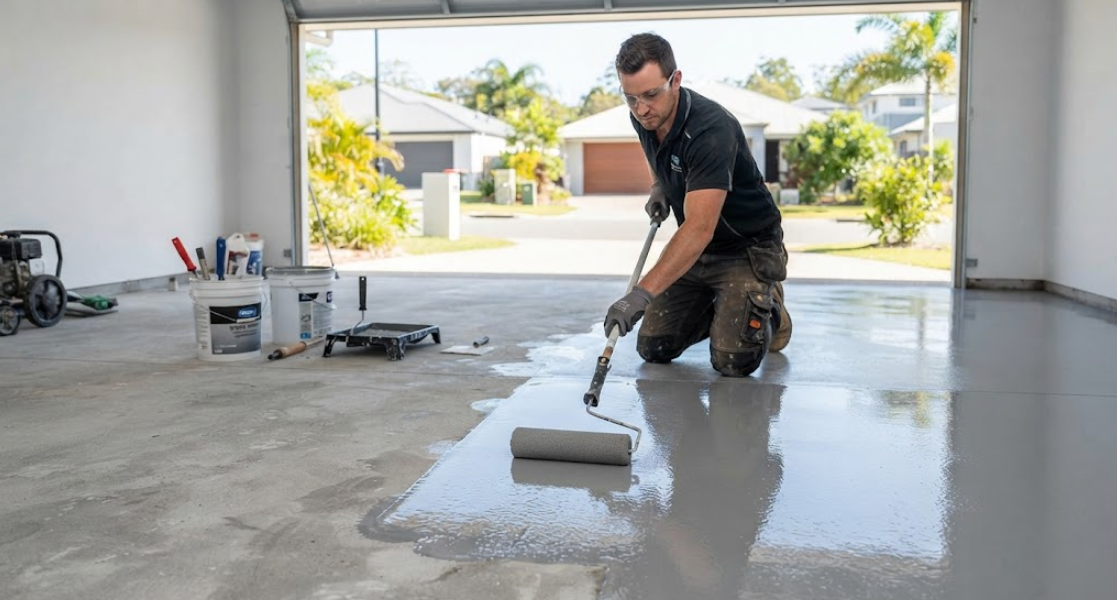
Before applying an epoxy floor coating over existing concrete, the surface should be assessed and prepared. Cleaning, mechanical grinding, removing unsuitable coatings, and repairing damaged areas can help the new epoxy bond properly.
Tell Us About Your Floor and Get Your Options Explained Clearly
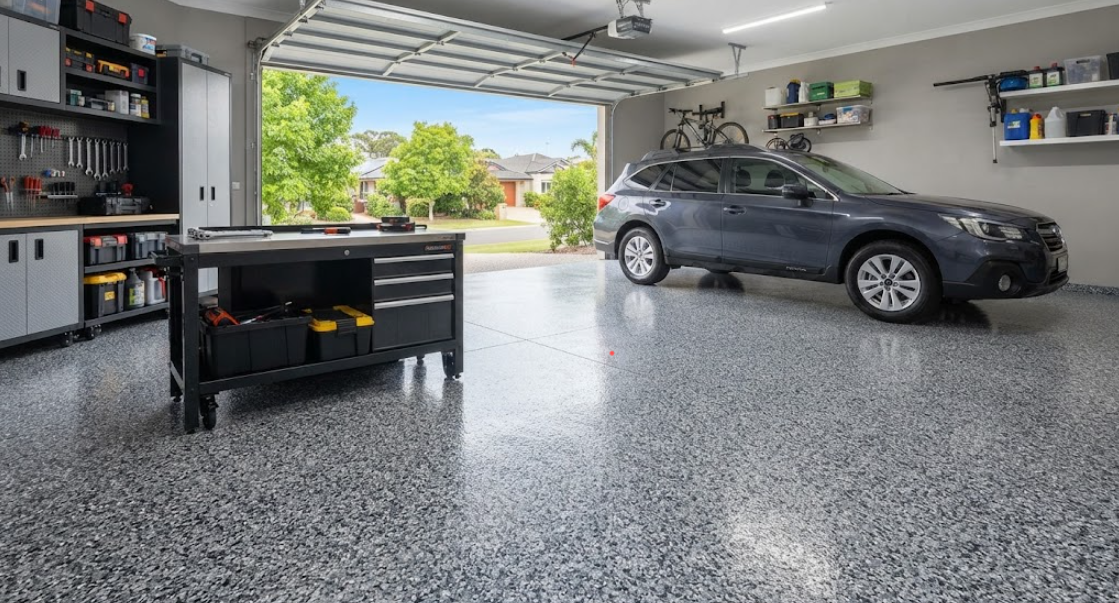
How Do You Maintain an Epoxy Garage Floor?
Regular cleaning and basic care help keep an epoxy garage floor looking clean and performing well. Simple maintenance also helps manage grit, oil, grease, and vehicle-related dirt.
Signs of Poorly Installed Epoxy Flooring
Installation quality and concrete preparation have a major impact on the performance of an epoxy floor. Common signs of poorly installed epoxy flooring include:
- Peeling or flaking: The epoxy may not have bonded properly to the concrete.
- Bubbling or blistering: Air, moisture, or problems beneath the coating can contribute to raised areas.
- Uneven or patchy coverage: Inconsistent application can leave noticeable differences in colour or texture.
- Premature wear: Excessive wear soon after installation can indicate issues with the coating system or preparation.
- Poor adhesion: Sections of the coating may lift or separate from the concrete.
- Visible contamination beneath the coating: Oil, grease, dust, or other contaminants may have interfered with adhesion.
- Rough or inconsistent texture: Poor application or inadequate preparation can affect the finished surface.
- Cracks showing through the coating: Existing concrete movement or damage may not have been properly addressed before coating.
- Peeling around edges and high-traffic areas: Areas exposed to vehicles, equipment, or frequent movement can reveal preparation or application problems.
Concrete Preparation Before
Epoxy Flooring
Proper concrete preparation for epoxy flooring helps create a suitable surface for the coating system. Existing cracks, oil contamination, old coatings, damaged concrete, and moisture concerns should be assessed before installation.
Preparation may include deep cleaning, mechanical grinding, removal of unsuitable coatings, and concrete repairs. For epoxy flooring over existing concrete, thorough preparation is particularly important for adhesion and long-term coating performance.
Find the Right Floor Coating for Your Property With Expert Advice
Bundamba and Nearby
Areas We Service
A concrete floor in Bundamba can serve very different purposes, from a home garage to a busy workshop or trade property. We work across the surrounding suburbs to match the coating to the way the space is used.
Areas we serve
- Bundamba
- Springfield Lakes
- Ripley
- Redbank Plains
- Yamanto
- Spring Mountain
- Flinders View
- Raceview
- South Ripley
- Karalee
- Brassall
- Carole Park
- Redbank
- Swanbank
- Wulkuraka
FAQs About Epoxy Flooring in Bundamba
Still deciding whether epoxy is right for your floor? These quick answers cover common searches about garage floors, workshops, concrete coatings and installation.
Can epoxy flooring be applied over stained concrete?
Yes, epoxy can be installed over suitable existing concrete after proper preparation. Oil, grease, and other contaminants generally need to be removed before coating.
How do you clean an epoxy garage floor?
Sweep or dust-mop the floor regularly to remove grit and debris. For deeper cleaning, use a mild cleaning solution with a soft mop.
How long does an epoxy garage floor last?
The service life depends on the coating system, concrete condition, preparation, and level of traffic. Proper installation and regular maintenance can help extend the floor's usable life.
Can epoxy flooring cover cracks in concrete?
Minor surface cracks may be repairable before applying epoxy. Larger or active cracks should be assessed and addressed as part of the concrete preparation.
Is epoxy flooring suitable for workshops?
Yes, epoxy flooring can be used in workshops where a durable, sealed, and easier-to-clean concrete surface is required. The coating system should be selected according to traffic, equipment, and exposure.
Is epoxy flooring slippery when wet?
A smooth epoxy surface can become slippery when wet. Slip-resistant aggregates or additives can be incorporated where additional traction is required.
How long does epoxy flooring take to install?
Installation time depends on floor size, concrete condition, preparation requirements, and the coating system. Curing time also needs to be allowed before normal use.
How much does epoxy flooring cost in Bundamba?
The cost depends on floor size, concrete condition, preparation, repairs, and the selected coating system. A site assessment is the most reliable way to determine the requirements and provide a quote.
Can epoxy flooring be repaired?
Some damaged epoxy floors can be repaired or recoated rather than completely replaced. The existing coating and concrete should be inspected first to determine the appropriate approach.
Repair, Recoat or Replace Your Floor?
Peeling, stains, cracks, or worn areas don't always mean you need a completely new floor. Tell our flooring contractor what you're seeing, and we'll help you understand whether repair, recoating, or a new system is worth considering.